
The Assembly Line
Why the culture you build before your first win is the only one that sticks

Steve was one of our best sales reps at Concur. Hit his number. Closed big deals. On paper, exactly the kind of performer you’d build a team around.
His CRM was empty. Every deal review, same answer: “Just trust me.” He’d show up, give a number, offer no detail on where deals stood, what the pipeline actually looked like, or what he needed from the team. His forecast was his word. That was supposed to be enough.
It wasn’t.
At Concur, there was a standard: you put your deals in the system. You showed your work in the weekly review. You were transparent — not because anyone doubted you, but because the team made decisions based on that information. When Steve’s pipeline was a black box, other reps couldn’t help. Managers couldn’t coach. The forecast was a guess dressed up as a number.
Steve hit his goal. He didn’t hit the culture. And at Concur, that distinction mattered.
He got the private conversation first. Then a more direct one with peers present. The standard was clear, and the standard didn’t bend for quota attainment. Steve didn’t last the year.
The Assembly Line
I didn’t have language for what Concur was doing until I read about Bill Walsh.
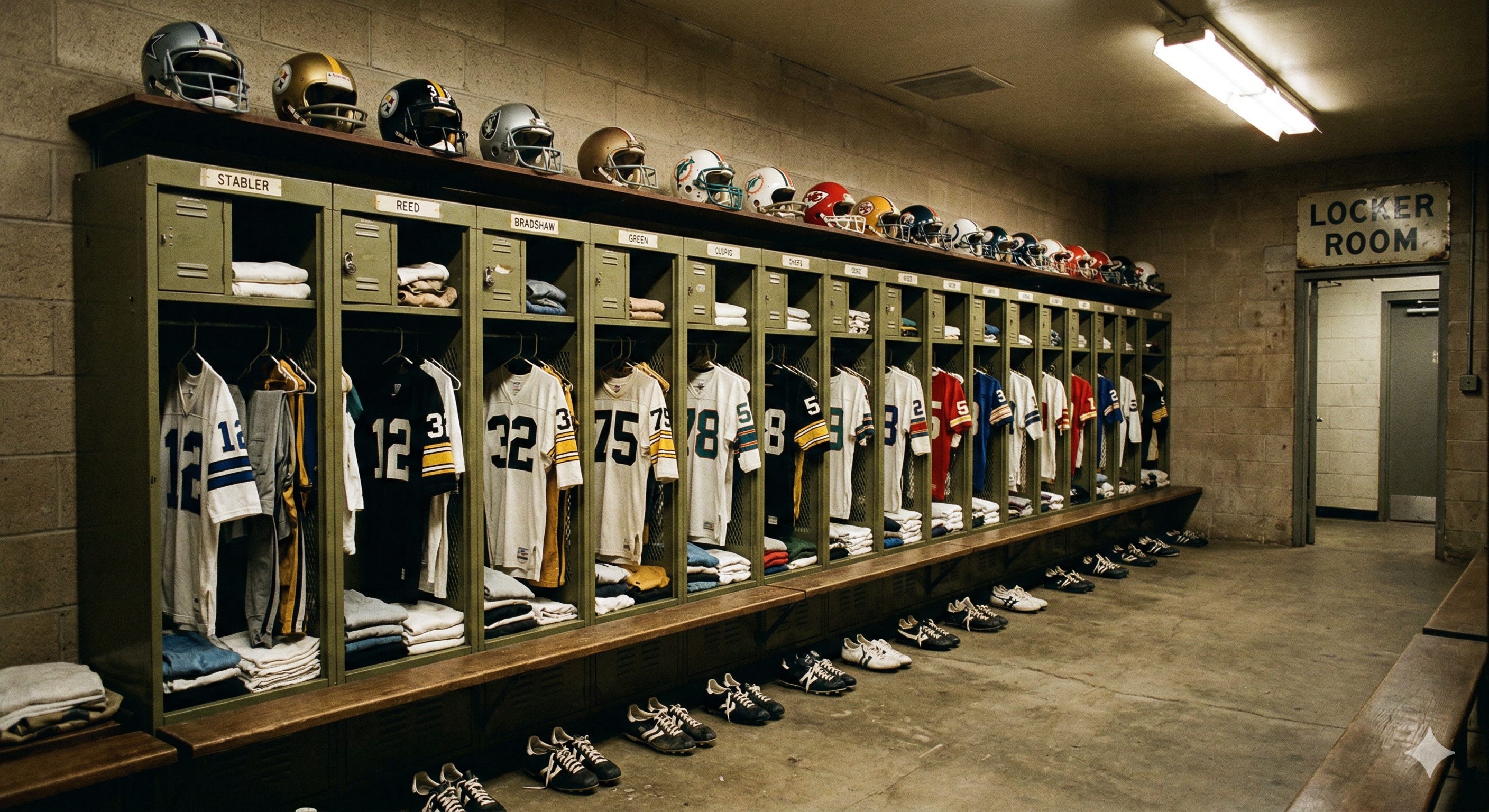
In 1979, Walsh inherited the worst team in the NFL — the 49ers had gone 2-14. His first move wasn’t recruiting stars or installing a new offense. He wrote a document specifying how the receptionist should answer the phone. How coaches should dress on the sideline. How the locker room should be organized. How players should address the media.
His staff thought he’d lost his mind. They had the worst roster in professional football and their new head coach was writing a dress code.
Walsh’s answer: “Winners act like winners before they’re winners.”
Two years later, they won the Super Bowl.
Walsh compared an organization to an automobile assembly line: “It must be first class or the cars that come off it will be second rate.” An assembly line isn’t the car. It’s the system that produces the car. You can’t inspect a finished car and fix a flaw baked in at step three. Get the process right, and the results follow. Get the process wrong, and no amount of talent fixes it.
That’s what Concur had built — an assembly line. The standard wasn’t “hit your number.” The standard was how you hit your number. Steve’s output was fine. His process was broken. And in a system where the process is the product, broken process eventually produces broken output — even if the scoreboard looks clean for a while.
The Counterintuitive Part
Here’s what makes this hard to accept: Walsh was spending time on things that had zero direct impact on winning football games. Phone etiquette doesn’t block a pass rush. A clean locker room doesn’t improve a quarterback’s arm. Dress codes don’t win third downs.
But Walsh understood something about systems that most people learn too late. Standards are contagious. When you walk into a building where every detail is cared for, you unconsciously raise your own effort. When you walk into a building where nobody seems to care about the small things, you unconsciously lower yours.
He wasn’t building a culture of winning. He was building an environment where winning became the natural consequence of how people already operated.
Most founders I work with say some version of the same thing: We’ll fix culture when we scale. Or my personal favorite: Culture is just vibes right now — we’ll formalize it later.
Walsh proved the opposite. The 49ers didn’t win and then get good culture. They built the culture and the winning followed. The standards weren’t aspirational posters on a break room wall. They were operational — specific, observable, enforceable on day one.
Culture isn’t what you say you value. It’s what you tolerate on a Tuesday afternoon when nobody’s watching.
Where You See This Now
Stripe is the obvious modern example. Patrick and John Collison obsessed over developer documentation before they had meaningful revenue. Not the product — the documentation. That sounds like a documentation decision. It was a culture decision. The Collisons were saying: clarity is how we operate. Not as a value on a slide — as a standard embedded in the work itself. Every engineer who joined after that inherited the expectation. The assembly line was already built.
Tobi Lütke at Shopify did something similar. When the engineering team was five people, he set standards for code quality that most companies don’t implement until they pass a hundred engineers. Overkill? By the time Shopify scaled, those standards were muscle memory. New hires absorbed the culture from the codebase.
The opposite is more common and more instructive. I’ve worked with founders who wrote their company values the week before a Series B pitch. Not because they suddenly cared about values — because the investor asked. The values were retrofitted to describe what the company already was, instead of prescribing what the company intended to be.
Retrofitted values are furniture. They’re technically in the room. Nobody uses them.
Why Early Culture Decisions Compound
Your first hire doesn’t just do work. They set a precedent for how work gets done. If they answer customer emails casually, that becomes the standard. If they show up late to standups and nobody says anything, lateness becomes acceptable. If they disagree with a decision by going around it instead of through it, that becomes the conflict resolution model.
By hire number five, the culture isn’t something you’re building. It’s something that already exists. The question is whether you built it deliberately or whether it assembled itself from the habits of whoever showed up first.
That’s what made Concur’s approach work. The executives didn’t just write down the values — they policed them. Good behavior got reinforced publicly. Bad behavior got addressed quietly at first, then less quietly, then conclusively. It wasn’t soft. It was systematic. And because it started from the top and was enforced consistently, new hires didn’t need a culture deck. They walked into a building where the standard was already in the walls.
Compounding works in reverse too. One tolerated shortcut becomes two. Two become a pattern. The pattern becomes “how we do things here.” By the time a founder notices the culture problem, they’re not correcting a behavior — they’re fighting an identity.
Walsh had another phrase: “The score takes care of itself.” Stop obsessing over the scoreboard. Define the standard of performance — the behaviors, the effort, the precision — and the score becomes a byproduct. Most founders chase the scoreboard and neglect the assembly line — because standards don’t show up in a dashboard.
That’s the hardest thing to internalize. You have to build the culture before you have evidence it works. It feels like faith. It’s actually engineering.
What to Do About This on Monday
Here’s the exercise. Before your next hire — before you even write the job description — write down five behavioral standards you expect from every person on your team.
Not values. Values are abstract. “We value transparency” is a value. A standard is: When someone disagrees with a decision, they raise it in the next team meeting, not in a side conversation afterward. A standard is: Customer emails get a first response within four hours, even if the response is “I’m looking into this.” A standard is: Meetings start on time. If you’re running the meeting, you send the agenda the night before.
Standards are observable. Values are interpretive — two people can both “value transparency” and behave in completely opposite ways.
Write them down before the hire because if the standard doesn’t exist before the person arrives, the person will define it. Their habits become the default. Their communication style becomes the norm. Walsh didn’t wait to see how his players would behave. He defined acceptable first. That specificity is what made the culture real instead of aspirational.
I should be honest about the limits of this analogy. Walsh had positional authority most founders don’t. He was the head coach. “This is how we dress” was the end of the conversation. First-time founders with three people in a garage don’t always have that leverage.
But here’s what I’ve found: the earlier you set the standard, the less authority you need to enforce it. When a standard exists from day one, it’s just “how we do things.” When you try to install it at employee thirty, it feels like a mandate. The first hire who joins a team with clear standards doesn’t experience them as rules — they experience them as the culture they signed up for. The thirtieth hire experiences them as bureaucracy.
Walsh built the assembly line when nobody was watching. That’s the only time you can build it without resistance.
Your startup is an assembly line. Every decision about how people communicate, disagree, and show up is a station on that line. Right now, those stations are either designed or random.
Walsh designed his before he had a single win to justify the effort. Stripe designed theirs before they had revenue to justify the investment. Concur enforced theirs even when it meant losing a rep who was hitting his number.
The score takes care of itself. But only if you build the line first.
What are the five standards your next hire will walk into? If you can’t name them, they don’t exist. And if they don’t exist, your next hire is about to write them for you.
___________
If you’re a software founder looking to turn your idea into a successful startup, Wildfire Labs can help you get there in just 6 months. Check out our program at https://wildfirelabs.io to learn more about our proven process, expert mentors, and the development resources we provide to help you build and scale your company. If you have any questions or need assistance with your startup, don’t hesitate to reach out to us at info@wildfirelabs.io.
Global Startup Consultant,technology executive & expert, MR.TODD GAGNE has worked with and advised high-growth tech companies & Startups as they’ve scaled from small companies to global enterprises. Across all of these companies,MR.TODD has identified a set of common patterns, and MR.TODD posts one repeatable Framework in each of his posts .
MR.TODD’s—The Assembly Line post is a definitive guide,and, presents a road map for navigating the most complex challenges that confront leaders and operators in high-growth startups.
MR.TODD shares his Concur experience relating to how Walsh compared an organization to an automobile assembly line.
MR.TODD post reminds me—In the early 1900s, Henry Ford did not invent a better car—he changed the economics of building them. Henry Ford’s assembly line transformed automotive manufacturing. Instead of having skilled workers assemble an entire car, or large portions of it, he divided production into a series of simple repetitive tasks performed by workers at a conveyor belt. The result was not just a manufacturing transformation but a cultural shift and a new operating model. Production time for the Model T fell from more than 12 hours to just 90 minutes, costs dropped sharply, and car ownership moved from a luxury to a mass-market reality.
A similar shift is recommended by MR.TODD. Hiring mistake are the most expensive lesson one learns as a founder.
MR.TODD reframed the topic by asking a simple question—Why Early Culture Decisions Compound—and,then answers—What to Do About This on Monday—Here’s the exercise. Before your next hire — before you even write the job description — write down five behavioral standards you expect from every person on your team.
MR.TODD sums up so APTLY—The score takes care of itself. But only if you build the line first.